
What to Look for in a Student Room or Apartment
Understanding Your Needs: Internet and Location
When searching for a student room or apartment, two of the most pivotal factors to consider are the internet connectivity and the location. In our increasingly digital world, a reliable and high-speed internet connection is paramount for academic success. Many educational institutions now employ online classes, requiring students to engage in remote learning. Additionally, research activities often depend heavily on constant access to the internet. A slow or unreliable connection can hinder performance and lead to unnecessary stress. Thus, ensuring that your future accommodation offers a robust internet setup should be a top priority.
Location is equally significant for students. Proximity to your university is advantageous for commuting purposes, helping to minimize travel time, costs, and potential disruptions to your schedule. Living closer to campus can enhance your educational experience by allowing you to participate in various campus activities and easily access libraries or study groups. Furthermore, selecting accommodations near public transportation can provide additional flexibility and accessibility, facilitating connections to other parts of the city or town. This paints a broader picture, as many students seek not just proximity to their institution but also access to local amenities such as grocery stores, cafes, and recreational facilities.
When evaluating potential options, consider specific factors like the availability of various internet service providers, Wi-Fi speeds, and any additional fees associated with connectivity. Similarly, assess the neighborhood for safety, noise levels, and overall community vibe. By carefully examining both internet services and the location of your student accommodation, you can create a conducive learning environment that enhances your educational journey and supports your overall well-being.
Essential Furniture and Amenities
When selecting a student room or apartment, it is crucial to consider the essential furniture and amenities that will adequately support daily life and academic pursuits. A well-furnished dwelling can greatly enhance comfort, productivity, and overall well-being. Key items to prioritize include a quality bed, a dedicated study desk, and essential kitchen appliances.
The bed is a fundamental piece of furniture, essential for restful sleep. A comfortable mattress can significantly impact a student’s ability to focus and perform academically. Beyond just sleep, the overall layout of the room should allow for easy navigation and accessibility, enhancing the living experience and enabling a smooth transition into a study mindset.
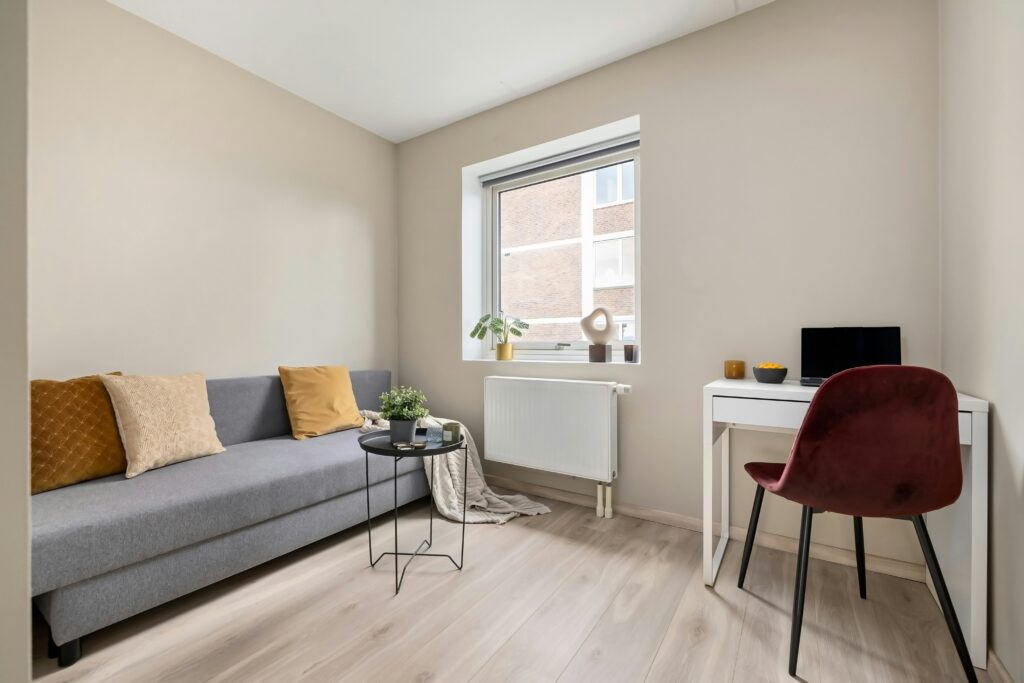
A sturdy study desk and chair are equally important. These items create a designated space for academic work and concentration. The desk should be large enough to accommodate books, a laptop, and other materials, while also being situated in an area with ample lighting. Investing in ergonomic furniture can prevent strain and foster longer, more productive study sessions.
Likewise, the inclusion of kitchen amenities cannot be overlooked. Basic appliances such as a refrigerator, microwave, and stove facilitate the preparation of meals, promoting a healthier lifestyle compared to reliance on takeout. Having access to cooking facilities can encourage better dietary choices, ultimately supporting physical and mental health.
It is also advisable to assess the condition of furniture as listed in various online lodging services. Reviewing the state of furniture can prevent unexpected issues and contribute to a satisfactory living experience. When weighing options between furnished and unfurnished apartments, consider the balance of convenience against the potential for customization. Furnished accommodations may save time and effort, but unfurnished rentals allow students to tailor their living spaces according to personal preferences and styles.
Landlord Reliability and Communication
When searching for student accommodations, evaluating the reliability of a landlord and their communication practices is paramount. A trustworthy landlord not only ensures that the property is well-maintained but also provides a supportive living environment conducive to academic success. One of the first steps in assessing a landlord’s reliability is to look into their track record. Prospective tenants can read online reviews, speak with former tenants, and seek out insights from peer networks. A consistent pattern of positive feedback can signal a responsible landlord who treats tenants with respect.
Signs of a trustworthy property manager may include prompt responses to inquiries, clear and transparent lease agreements, and proactive maintenance during tenancy. A reliable landlord should present themselves as approachable and willing to address issues as they arise. In contrast, red flags may manifest in delayed communication, evasiveness about property conditions, or failure to make necessary repairs. Establishing open lines of communication before finalizing a rental agreement is essential; students should feel confident in their ability to reach out with concerns or questions.
Furthermore, it is important to understand the role of platforms such as ulodging in aiding student searches for reliable landlords. These platforms often vet landlords and provide ratings that can guide students in their decision-making process. They can serve as intermediaries, facilitating clear communication between students and landlords, thereby ensuring that inquiries are handled professionally. As a prospective tenant, it is your right to be informed about your responsibilities and the expectations of your landlord before you commit to a rental agreement. This understanding fosters a collaborative atmosphere, advancing a positive tenant-landlord relationship that benefits both parties.
Safety First: Assessing Neighborhoods and Properties
Choosing a student room or apartment requires careful consideration of the safety aspects associated with both the property and its surrounding neighborhood. As students often move away from home for the first time, assessing the safety of their new living environment should be a top priority. One of the first steps in this evaluation is to study the neighborhood’s overall safety. This involves researching local crime rates, which can typically be obtained through online databases or local law enforcement websites. A high crime rate can be a red flag, indicating that the area may not be suitable for students seeking a secure living situation.
In addition to crime statistics, students should also consider the availability of local amenities that contribute to safety. Well-lit streets, a reputable neighborhood watch program, and proximity to emergency services such as hospitals and police stations can enhance the security of a location. Engaging with current residents can provide invaluable insights into both the perceived and actual safety of the neighborhood, making it easier to gauge whether it aligns with a student’s comfort level.
Beyond the neighborhood, the specific property should also be thoroughly evaluated for security features. Prospective tenants should look for robust locks on doors and windows, alarm systems, and potentially even surveillance cameras. Some properties may tout security features in their listings, making it easier for students to identify safe options. It is also advisable for students to inquire about the building’s maintenance practices, as a well-maintained property with proactive management is often indicative of a safer living environment.
Ultimately, prioritizing safety while searching for student accommodations empowers individuals to make informed decisions, ensuring both peace of mind and a supportive living experience throughout their academic journey.